Table Of Content
Truss length is typically limited by manufacturing and transportation capacities for a specific manufacturer. Trusses over 60’ in length are considered ”long span trusses” and require special installation and bracing considerations. Visit SBCA’s website(link is external) for more information on long span truss installation.
RedBuilt™ Open Web Trusses
These span tables provide representative spans that are possible with 4x2 floor trusses at various truss depths, on-center spacing and deflection limitations. Like floor trusses, I-joists are manufactured off-site to the specifications of the building. In addition, while most floor trusses are custom-built for each site, some home-building suppliers may have different lengths and depths in stock for builds of standard dimensions. Typical floor trusses are created using 2” x 3” or 2” x 4” construction-grade lumber, which is more readily available compared to 10” or 12” versions.
EXPERIENCE EXCEPTIONAL STRENGTH, FLEXIBILITY, AND LABOR SAVINGS WITH FLOOR TRUSSES
Panel length is determined by the truss technician and typically determines what size material is used for the top or bottom chord. The greater the panel length, the more likely the truss technician is to use wider width material. Manufacturing capabilities for individual component facilities dictate the maximum overall depth that can be manufactured at that location. The files are in .DXF format so they can be edited or inserted directly into construction plans. Floor trusses differ because they are less bouncy, more secure, and create large, open spaces between the top and bottom chords, making them easier to install than floor joists and I-joists. These can be cut on-site, making them slightly less expensive than floor trusses, but they require drilling to place cables, plumbing, and the like.
Solutions with Floor Trusses
The open web construction allows for services and utilities to be efficiently run through the open webs, with no need for cutting, drilling, or routing. Your site erection time is greatly reduced and dollar losses from job site material shortages and pilferage are eliminated. The architectural information above is provided for general informational and educational purposes only and is not a substitute for professional architectural advice. Accordingly, before taking any action based on such information, we encourage you to consult with the appropriate design professionals. The use or reliance of any information contained in this document is solely at your own risk. Any replacement or change in the truss system arrangement can cause long delays in the project.
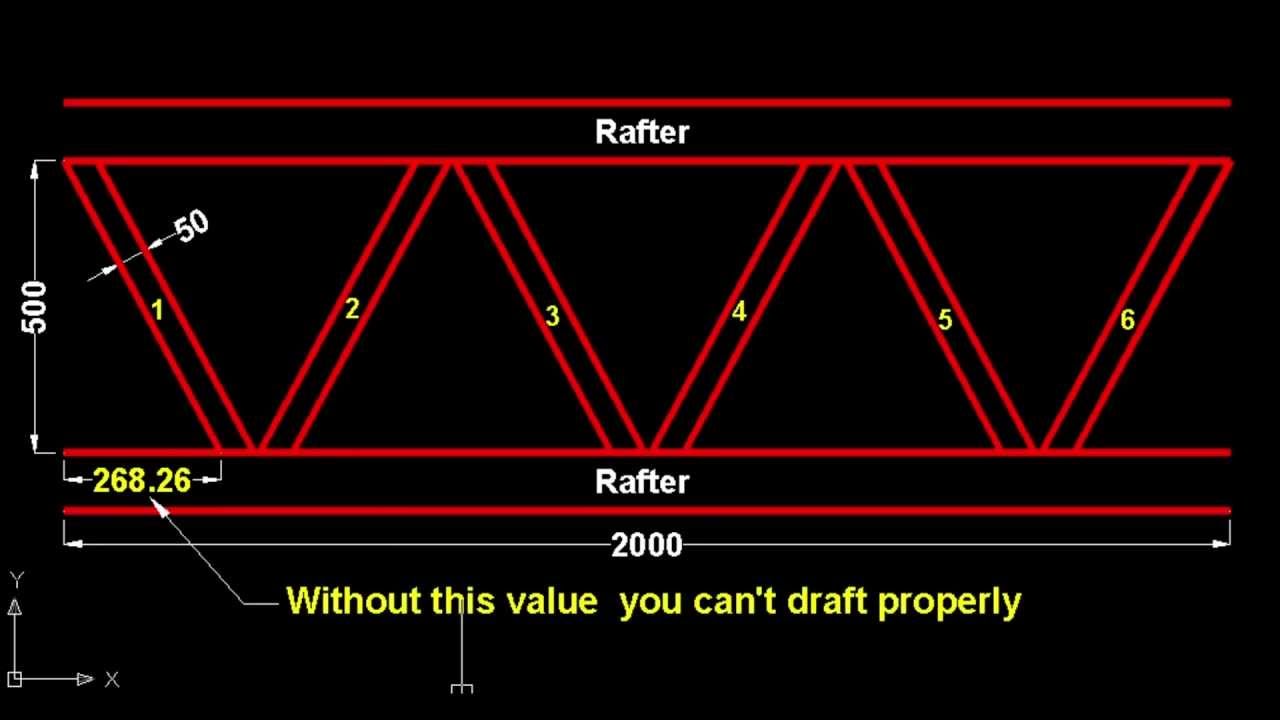
The Warren truss is the most common type of bridge used in construction because it is easy to construct and efficiently distributes loads among its components. The vertical and diagonal components are cut using a miter saw and set between the chords to provide support. Because the top and bottom chords are typically 2 ½” or 3 ½” wide, fastening the trusses to the subfloors or the ceiling is easier. Pound for pound, RedBuilt Open-Web trusses are among the strongest structural members produced.
Structural Building Components Magazine
Parr Lumber acquires Roof Truss Supply - LBM Journal
Parr Lumber acquires Roof Truss Supply.
Posted: Tue, 28 Dec 2021 08:00:00 GMT [source]
With the needs of structures evolving, we work collaboratively to provide cohesive solutions from open web trusses to I-joists, LVL, wall panels, and more. Draft stopping is usually just a layer of drywall placed in the cavity of the floor system. Another code-related issue depends on the floor-to-floor height of the project. If you add in your standard stud wall heights (10′-1.25″) your height of the floor truss, subfloor, and floor finish. Just know that there is an area in the building code that prevents you from building a stair greater than 12 feet without a landing. In the IRC 2018, this particular restriction has been adjusted to approx 12′-6″.

Installing exposed trusses and solving a skylight dilemma
Often a solution for exceptionally long spans, they’re still a powerful choice for all types of commercial applications. The engineered strength of the TrimJoist® system provides for longer spans and wider on-center spacing that results in lower costs from both the material and the labor perspective. Do not build a floor truss without understanding how to build it to fit your specific needs. However, several aspects of building, such as weight and the span that needs the truss determine their construction.
Floor trusses consist of a top and bottom rail, sometimes known as a chord, which is separated by vertical and diagonal components. Open Web Floor Trusses are a fantastic option for any home as they provide design freedom and a dependable structure. They are constructed with 2x4s on the bottom and top, with a “web” between them. They are durable and not prone to bowing or shrinking, making them the most expensive option. Steel floor joists are resistant to fire and moisture, and they creak less when walking, which will make your home quieter. Your local representative can assist with design configuration, budget pricing, building system integration, detailed specification, and support throughout your build.
Floor Trusses
Common joist materials include floor trusses, I-joists, and dimensional lumber such as 2x10 and 2x12. Floor panels offer a very quick method for setting a floor system in the field, typically using a crane. Occasionally floor panels will have a ceiling material applied to the underside of the panel in the factory, further speeding up the construction process in the field. Typical constructions principles still apply, floor trusses are required to be supported by and fastened to structural supports such as walls, columns, or beams. Architects, engineers and contractors are using floor trusses to create high quality, squeak-free construction with the added benefits of reduced framing time, waste, and callbacks.
Each open web truss we ship is built on a foundation of history, integrity and quality. In the late 1950s, RedBuilt’s founders invented an innovative composite steel and engineered wood open web truss. Today, headquartered in Boise, ID, RedBuilt owns and operates four manufacturing plants, five design centers, and a country-wide technical sales team embedded and active in local communities.
Triangles are the simplest geometric figure that will not change shape when the lengths of the sides are fixed and offer significant structural stability in design. These days, steel floor joists have become very popular since they are more long-lasting and durable than wood joist options. They are created to provide a better load-bearing system to support home structures. Because of that, they are more expensive than most other joist types, but since steel is stronger than wood, you can complete a project using steel joists quicker with less support.
Floor trusses are able to span farther than dimensional lumber and even I-Joists. This reduces the need for interior bearing and provides space for HVAC, plumbing and electrical systems within the floor panels. Our custom designed floor truss systems reduce the amount of bounce that can be found in conventionally framed floor joist systems. Floor truss depth is measured from the bottom chord to the top chord and typically maintains that height throughout the span of the truss.
In addition to the bottom chord and webs, the top chord is used to create the upper perimeter of the structure, or the roof. The top chord is configured to resist live loads such as those applied during construction, as well as wind loads, snow loads and others. It also resists more permanent dead loads like sheathing and roofing materials. For traditionally spaced trusses, the top chord is cut out of 2x4 or 2x6 dimensional lumber but can also be cut out of 2x8, 2x10, or 2x12 material for roof trusses.


No comments:
Post a Comment